

Need to Talk to Someone?
- Lying awake for 30 minutes or more before falling asleep most nights
- Waking 2–4 times per night and struggling to return to sleep
- Waking 1–2 hours earlier than intended with racing thoughts
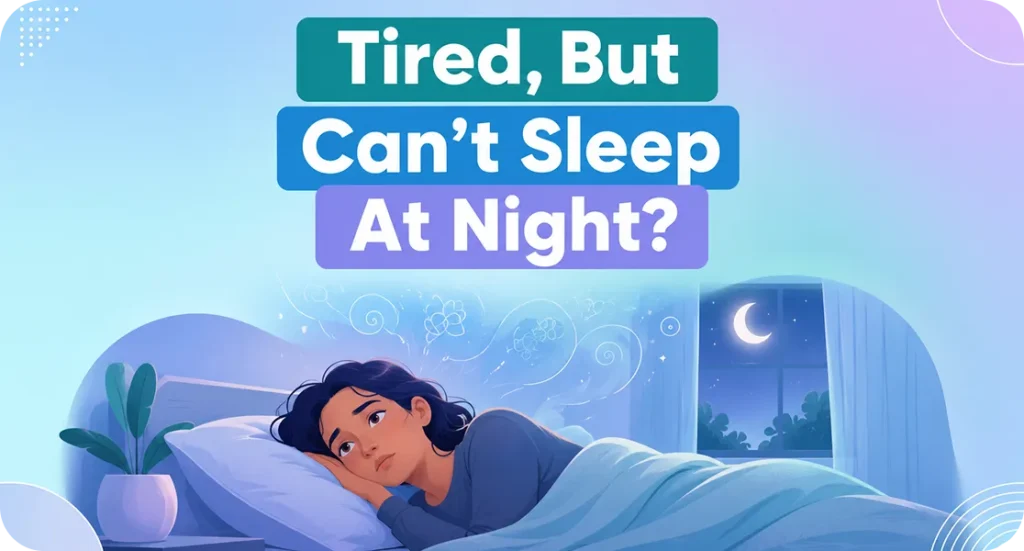
- Feeling physically tired but mentally alert when you lie down
- Dreading bedtime because you expect to lie awake
- Waking feeling exhausted despite spending 7–8 hours in bed
- Relying on your phone or television to distract yourself into sleep
- Noticing that you sleep better away from home, such as during holidays or travel
- Irritability, difficulty concentrating, or low mood during the day
- Difficulty with memory or decision-making linked to poor sleep
- Physical symptoms such as headaches, muscle tension, or sensitivity to noise
- Increased anxiety or depressive symptoms that worsen with poor sleep
Understanding Your Sleep Cycle
Feeling Overwhelmed?
Oppam Therapist Wherever You Are
- Stage 1 non-REM: The transition from wakefulness to light sleep
- Stage 2 non-REM: Body temperature drops, muscles relax, and heart rate slows
- Stage 3 non-REM: Deep, slow-wave sleep that supports physical restoration and immune function
- REM sleep: A stage associated with vivid dreaming, learning, memory processing, and emotional regulation
Most adults complete approximately four to six sleep cycles per night, although cycle length and stage distribution vary throughout the night. Deep sleep is usually more prominent earlier in the night, while REM periods become longer toward morning.
- Feeling tired does not always mean the nervous system is ready for sleep.
- Trying too hard to force sleep can increase alertness and frustration.
- Irregular sleep schedules can weaken the alignment between sleep pressure and the circadian rhythm.
- Caffeine can reduce the effect of adenosine and delay sleepiness, even when consumed several hours earlier.
- Bright light and screen exposure at night can interfere with circadian sleep signals.
- Stress, anxiety, pain, medications, medical conditions, and sleep disorders can also contribute to persistent sleep difficulty.
- One poor night does not necessarily indicate insomnia.
- Chronic insomnia generally involves repeated sleep difficulty combined with daytime impairment over an extended period.
Research has described hyperarousal as an important mechanism in chronic insomnia. It is not limited to worrying at bedtime; it may involve increased cognitive, emotional, and physiological activation that continues during both the day and night. This helps explain why someone can feel deeply fatigued while their nervous system remains too alert for sleep to begin easily
What Causes Sleep Problems?
The Role of the Sleep Schedule
Conditioned Wakefulness
Gulf Expat Sleep Challenges
Screen Use and Light Exposure
Depression and Sleep
Types of Sleep Problems
Insomnia
Sleep Anxiety
Psychophysiological Insomnia
Circadian Rhythm Disorders
How Sleep Problems Affect Mental Health
Need to Talk to Someone?
The Most Effective Treatment for Sleep Problems: CBT-I
CBT-I addresses both the cognitive and the behavioural factors that maintain insomnia. It typically runs over five to eight sessions and includes:
-
- Sleep restriction therapy: temporarily reducing time in bed to consolidate sleep and rebuild sleep pressure
- Stimulus control: re-establishing the bed as a cue for sleep rather than wakefulness (e.g. only using the bed for sleep, getting out of bed if awake for more than 20 minutes)
- Sleep hygiene: addressing specific behaviours that disrupt the sleep cycle (screen use, caffeine, irregular schedules)
- Cognitive restructuring: challenging and reframing the unhelpful beliefs about sleep that maintain anxiety (e.g. “if I don’t sleep 8 hours I can’t function”)
- Relaxation techniques: progressive muscle relaxation and breathing techniques that activate the parasympathetic nervous system
- Paradoxical intention: a counterintuitive technique in which the client deliberately tries to stay awake — which removes the performance pressure that makes sleep harder.
A meta-analysis published in *Sleep* (Trauer et al., 2015) found that CBT-I produced clinically significant improvements in sleep onset latency, wake time after sleep onset, and sleep quality — and that these improvements were maintained at 12-month follow-up. This durability distinguishes CBT-I from sleep medication, which is effective while taken but does not address the underlying mechanisms.
When Should You Seek Professional Help for Sleep Problems?
Sleep problems warrant professional attention when they have persisted for more than three months, are occurring three or more nights per week, and are affecting your daytime functioning — mood, concentration, work performance, or relationships. You do not need to reach a threshold of severe suffering before seeking support.
- You have had difficulty sleeping for three months or more, most weeks
- You lie awake for more than 30 minutes before falling asleep most nights
- Sleep problems are affecting your mood, concentration, or performance at work
- You are using alcohol, over-the-counter medication, or supplements regularly to manage sleep
- Sleep problems are accompanied by persistent low mood, anxiety, or a sense of hopelessness
- You dread going to bed because you expect to lie awake
- You have tried sleep hygiene changes consistently for several weeks without improvement
- A partner or family member has reported that you snore heavily, stop breathing, or move excessively during sleep (possible sleep apnoea — requires medical assessment)
Need to Talk to Someone?
Frequently Asked Questions
Why am I so tired but can't sleep?
What are the most common causes of difficulty sleeping?
How does the sleep cycle work and why does it matter?
Is it normal to wake up at 3am every night?
Can online therapy help with sleep problems?
I am a Keralite in the Gulf and I cannot sleep. Is this common?
How much does sleep counselling cost in Kerala or online?
External Resources
- National Heart, Lung, and Blood Institute (NHLBI) — Information on sleep stages, circadian rhythm, sleep pressure, adenosine, melatonin, and healthy sleep habits.
- American Academy of Sleep Medicine (AASM) — Clinical guidelines for diagnosing and treating insomnia and other sleep disorders.
- Sleep Medicine Reviews — Riemann et al. — Research describing hyperarousal as a central mechanism involved in the development and persistence of chronic insomnia.
- Journal of Clinical Sleep Medicine — Evidence-based guidance on behavioural and psychological treatments for chronic insomnia, particularly Cognitive Behavioural Therapy for Insomnia, or CBT-I.
- JAMA — Clinical evidence reviewing insomnia, its causes, daytime effects, and behavioural and medication-based treatments.
- NHLBI Sleep Deprivation and Deficiency Resources — Research-based information on how insufficient sleep affects concentration, mood, physical health, performance, and safety.
- Sleep Medicine Reviews — Baglioni et al. — Research examining the relationship between insomnia, emotional reactivity, anxiety, depression, and cognitive arousal.
- International Classification of Sleep Disorders (ICSD) — Clinical diagnostic guidance covering insomnia, circadian rhythm disorders, sleep-related breathing disorders, and other sleep conditions.