
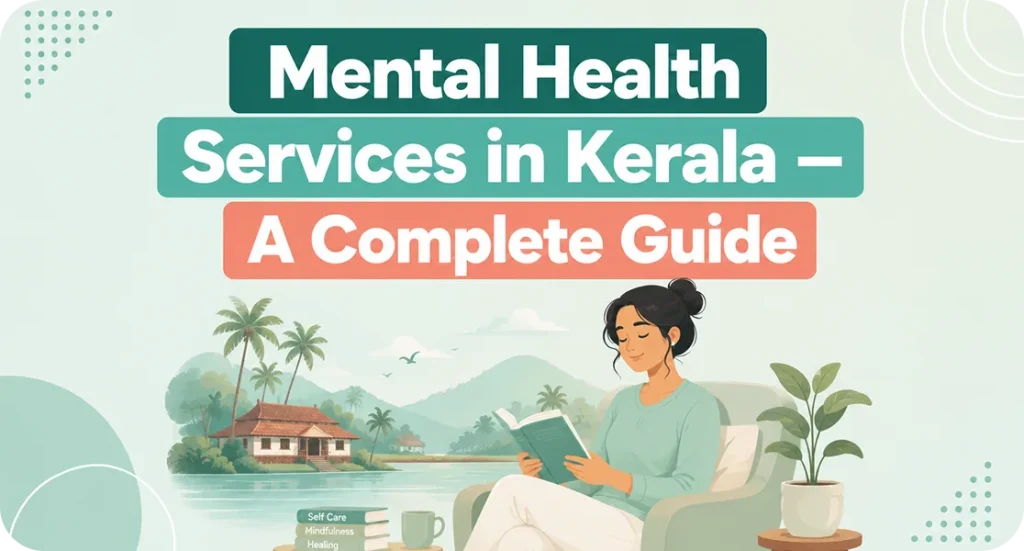
Mental Health Services in Kerala!! Kerala has one of the highest literacy rates in India, one of the most developed healthcare infrastructures in the country, and a population that is, by most measures, more health-aware than the national average. And yet, when it comes to mental health, the gap between need and access remains significant.
The reasons are familiar to anyone who has grown up in a Keralite family. Stigma that runs deep enough to make the word “psychiatrist” feel like an accusation. A cultural expectation that difficulties are managed within the family, not disclosed outside it. A mental health system that, even in its better-resourced forms, is primarily oriented around severe psychiatric conditions rather than the anxiety, depression, relationship difficulties, and stress that affect the far larger portion of the population who never come near a hospital.
Need to Talk to Someone?
Book a private online session with a licensed therapist
Then there is the practical confusion. Kerala’s mental health landscape has expanded considerably over the past decade — government hospitals, private clinics, online platforms, charitable services, community mental health programmes — and navigating it without a clear framework is genuinely difficult. Credentials that look similar may represent very different levels of training. A platform that lists “counselling services” may be offering peer support rather than clinical therapy. A psychiatrist and a psychologist are not interchangeable professionals, and going to one when you need the other creates delay rather than resolution
This article is a comprehensive, clinically grounded guide to mental health services in Kerala — written not as a directory but as a framework for making an informed decision about what you actually need, where to find it, and how to evaluate what you are looking at before committing your time, money, and trust to a particular path.
The Kerala Mental Health Landscape: An Honest Overview
Kerala’s mental health services exist across several distinct tiers, each with different strengths, limitations, and appropriate use cases.
Government Hospital Psychiatry
The government mental health infrastructure in Kerala includes the Institute of Mental Health and Neuro Sciences (IMHANS) in Kozhikode, psychiatric departments at Medical College Hospitals in Thiruvananthapuram, Kochi, Kozhikode, Thrissur, and Alappuzha, and district-level mental health programmes under the National Mental Health Programme (NMHP).
These services are the most accessible by cost — largely free or heavily subsidised — and carry qualified professionals, including psychiatrists and clinical psychologists. Their significant limitations are waiting times, which can be weeks or months for outpatient appointments, a primary focus on severe psychiatric conditions rather than the anxiety, depression, and relationship difficulties that affect the majority of people who need support, and — for many patients — a clinical environment that feels stigmatising to access in a community where being seen attending a psychiatric hospital carries social consequences.
Private Psychiatric Clinics and Hospitals
Private psychiatric practice in Kerala is centred primarily in Kochi, Thiruvananthapuram, Kozhikode, and Thrissur, with growing availability in Kannur, Palakkad, and other district towns. Private psychiatrists offer shorter waiting times, more personalised consultation, and in some cases a less institutionally stigmatising environment than government hospital attendance.
Cost varies considerably — from ₹500 to ₹2,000 or more per consultation — and the quality, as with any private medical sector, is highly variable. The same credential evaluation principles apply: MBBS plus MD Psychiatry or DPM from a recognised institution and MCI registration are the meaningful markers.
A significant limitation of private psychiatric services for the majority of mental health presentations is the same as for government services: psychiatrists are trained to diagnose and manage medically, not to provide structured psychological therapy. A psychiatric consultation that results in a prescription addresses the neurochemical dimension of a condition without touching the cognitive and behavioural patterns that maintain it. For conditions like GAD, social anxiety, panic disorder, and mild to moderate depression, psychological therapy produces better long-term outcomes — and in Kerala, access to qualified psychologists has historically been far more limited than access to psychiatrists.
Private Psychology and Counselling Practice
Clinical psychologists and counselling psychologists in Kerala work in private practice, within hospital psychology departments, and increasingly through online platforms. The credential landscape is important to understand.
A clinical psychologist in India holds an M.Phil. in Clinical Psychology from an RCI (Rehabilitation Council of India) accredited institution — the highest level of psychological training in India, qualifying the practitioner to assess, diagnose, and treat the full range of mental health conditions using evidence-based therapies. A counselling psychologist typically holds an M.Sc. or M.A. in Counselling Psychology. A counsellor holds various qualifications from diploma to master’s level, with significant variation in clinical scope.
In Kerala’s private sector, these distinctions are not always visible from the outside. Websites may list a range of credentials without making clear which professional is appropriate for which presentation. The consumer — the person seeking help — is left to navigate this without adequate information, which is one of the reasons this guide exists.
Community Mental Health Initiatives
Kerala has a number of community mental health programmes, particularly under the Arogyakeralam initiative and through NGO-run services. These provide valuable reach into populations that private and hospital services do not serve — rural communities, lower-income groups, and people who would not seek help through formal clinical channels.
The limitation is that community mental health services are typically staffed by counsellors and community health workers rather than clinical psychologists or psychiatrists, making them appropriate for psychoeducation, support, and referral but not for the structured clinical treatment of anxiety disorders, depression, or complex presentations.
What the Research Says About Mental Health Need in Kerala
Before examining the service options in detail, it is worth grounding this discussion in what the evidence tells us about mental health need in Kerala specifically.
According to NIMHANS’s National Mental Health Survey of India, the prevalence of mental disorders in Kerala is higher than the national average — a counterintuitive finding that reflects Kerala’s higher awareness and more accurate reporting rather than genuinely higher rates of illness. The survey found that anxiety disorders, depressive disorders, and substance use disorders are the three most prevalent conditions, accounting for the vast majority of mental health burden in the state.
The treatment gap — the proportion of people with a mental health condition who receive no treatment — was estimated at over 80 per cent for common mental disorders in Kerala. This means that for every person receiving treatment for anxiety or depression in Kerala, approximately four others with the same condition are receiving nothing.
According to research published in The Lancet Psychiatry, the treatment gap for mental health conditions in South Asia is one of the largest globally, driven by a combination of stigma, limited culturally competent services, insufficient mental health literacy, and the economic barriers to private care. Kerala’s literacy advantage reduces the mental health literacy barrier somewhat but does not eliminate the others.
The Gulf migration dimension adds a layer specific to Kerala. Approximately 2.3 million Keralites live in Gulf countries, according to Norka Roots data. This population — characterised by social isolation, financial pressure, work-related stress, and distance from family support networks — carries significantly elevated mental health risk without proportionate access to culturally competent care in either their country of residence or at home.
Oppam: Mental Health Services Built for Keralites
Oppam was designed specifically to address the gaps in Kerala’s mental health landscape — not as a generic online therapy platform with a Malayalam language filter, but as a clinically serious, culturally grounded service built around the specific needs of Keralite and South Asian patients.
What Makes Oppam Different
Most mental health platforms in India are built for a generalised English-speaking urban audience and then adapted, inadequately, for regional language users. Oppam inverts this. Malayalam-speaking South Asian communities — in Kerala and the diaspora — are the primary audience, and everything about the service is built from that starting point.
This means therapists who understand the specific psychological pressures of Kerala family culture without requiring the patient to explain them. It means understanding what it costs a Keralite woman in her 30s to decide that her marriage needs professional support. It means understanding the Gulf NRI worker’s specific isolation, the student’s SSLC and entrance exam anxiety, the returned migrant’s readjustment difficulty. These contexts do not need to be explained from scratch in an Oppam session — they are the working context that the therapeutic relationship begins within.
Online Counselling: Accessible From Anywhere in Kerala and the Diaspora
Oppam’s online counselling service is accessible via secure video call from anywhere in Kerala — Thiruvananthapuram, Kochi, Kozhikode, Thrissur, Kannur, Kollam, Palakkad, Malappuram, and across all 14 districts — as well as from the Gulf, UK, Canada, Australia, Singapore, Malaysia, and anywhere else in the Keralite diaspora.
Sessions are available in Malayalam, Tamil, and English. Session fees are transparent and accessible, with no hidden charges and no mandatory session packages. No GP referral is required. Booking takes under ten minutes and same-day appointments are available for some practitioners.
For Keralite patients for whom the privacy concern of attending a local mental health clinic is a significant barrier — and in Kerala’s dense community networks, this concern is clinically rational rather than merely paranoid — online access from home removes the visibility entirely. No waiting room. No neighbours seeing your car. No explanation required to anyone until you are ready.
For patients who prefer in-person sessions, or whose clinical presentation benefits from face-to-face contact, Oppam operates an offline mental health centre in Kozhikode — one of Kerala’s major cities and the centre of the largest NRI-origin population in the state.
The Oppam Kozhikode clinic team currently includes:
Dr. Sreekumar A — Psychiatrist with over 4,000 therapy hours of clinical experience. Specialisations include family and parenting concerns and self-esteem and personal development. Available at ₹1,500 per session, with urgent appointments available within minutes for acute presentations.
Dr. Manju P C — Psychiatrist with over 4,000 therapy hours. Specialisations include relationship and marital issues and family and parenting concerns. Available at ₹1,500 per session.
Arwa Binth Abeebacker — Clinical Psychologist with over 2,000 therapy hours. Specialisations include relationship and marital issues and self-esteem and personal development. Available at ₹2,000 per session.
Anupama Surendran K — Consultant Psychologist with over 4,000 therapy hours. Specialisations include anger and emotional regulation and anxiety, stress, and panic. Available at ₹1,500 per session.
The Kozhikode clinic covers the full clinical spectrum from psychiatric assessment and medication management to structured psychological therapy and specialist counselling. Both in-person and online sessions are available through the Kozhikode team.
For the large and growing Keralite professional community in Bangalore — one of the largest concentrations of Malayali professionals outside Kerala — Oppam operates a mental health centre in Kalyan Nagar, Bengaluru.
Address: 3rd Floor, 7M, 420, 7th Main Road, HRBR Layout 1st Block, HRBR Extension, Kalyan Nagar, Bengaluru, Karnataka 560043. Open until 8:30 pm to accommodate the working hours of Bangalore’s professional community.
The Bengaluru centre team includes:
Dr. Mathews J Panicker — Psychiatrist with over 4,000 therapy hours. Specialisations include addiction and substance use and crisis and severe mental health presentations. Available at ₹1,500 per session. Malayalam-speaking.
Sharika Pramod— Consultant Psychologist with over 5,000 therapy hours. Specialisations include relationship and marital issues and family and parenting concerns. Available at ₹1,500 per session. Malayalam-speaking.
The Bengaluru centre serves Keralite professionals and families across Bangalore, including those in Whitefield, Electronic City, Indiranagar, HSR Layout, and surrounding areas, with both in-person and online sessions available.
Understanding What Type of Support You Need
One of the most common sources of confusion for people seeking mental health support in Kerala is not knowing what type of professional fits their situation. This matters practically — going to a psychiatrist when you need a psychologist, or to a counsellor when you need a clinical psychologist, creates delay rather than resolution.
When You Need a Psychiatrist
A psychiatrist is the right professional when your presentation may require medication — severe or treatment-resistant depression, bipolar disorder, psychosis, schizophrenia, ADHD requiring pharmacological management, or addiction requiring medically supervised detoxification. Psychiatrists can also provide psychiatric assessment and diagnosis when this is needed for workplace, legal, or insurance purposes.
Both Oppam’s Kozhikode clinic (Dr. Sreekumar A, Dr. Manju P C) and Bengaluru centre (Dr. Mathews J Panicker) have experienced psychiatrists available. If you are uncertain whether you need a psychiatrist or a psychologist, booking an initial consultation with a psychologist is often the more efficient starting point — a psychologist can assess your presentation and refer to a psychiatrist if medication is indicated.
When You Need a Psychologist
A clinical or consultant psychologist is the appropriate professional for anxiety disorders, mild to moderate depression, relationship and marital difficulties, grief, work stress and burnout, trauma that does not require immediate psychiatric stabilisation, and most of the common mental health concerns that bring people to therapy.
Psychological therapy — particularly Cognitive Behavioural Therapy — is the evidence-based first-line treatment for these conditions. According to a comprehensive meta-analysis published in Psychological Medicine, CBT produces large effect sizes across all major anxiety and depressive disorder categories, with effects durable at long-term follow-up and superior to medication alone for relapse prevention.
Oppam’s psychological team across Kozhikode and Bengaluru covers anxiety, depression, relationship difficulties, emotional regulation, anger management, self-esteem, family and parenting concerns, and Gulf NRI-specific presentations.
When You Need Couples or Family Therapy
Couples therapy and family therapy are distinct from individual therapy and require specific training. Not all psychologists are trained in systemic or couples approaches. When booking for relationship or family difficulties, ask specifically about the therapist’s training and experience in couples work.
Oppam offers both individual and couples sessions, with therapists who have specialist experience in relationship and marital issues across both the Kozhikode and Bengaluru teams.
When to Seek Professional Help
Seek professional mental health support if anxiety, low mood, relationship difficulties, or work stress have been present on most days for four weeks or more and are affecting your functioning at work, in relationships, or in daily life. If sleep has been significantly disrupted. If physical symptoms — headaches, palpitations, digestive problems — have been investigated medically without explanation. If alcohol or other substances are being used to manage the way you feel. If there are any thoughts of self-harm or hopelessness
For Keralites across Kerala and the diaspora, online counselling in Kerala through Oppam gives you direct access to clinically trained, Malayalam-speaking therapists without the stigma concern of clinic attendance, without requiring explanation of your cultural context, and without a waiting list that delays care that is needed now. In-person options are available at Oppam’s Kozhikode and Bengaluru centres for those who prefer face-to-face sessions. Book your first session →
Frequently Asked Questions
What mental health services are available in Kerala?
Kerala’s mental health services span government hospital psychiatry departments (IMHANS Kozhikode, Medical College Hospitals), private psychiatric clinics, private psychology and counselling practice, community mental health programmes, and online therapy platforms. Government services are most accessible by cost but have significant waiting times and focus primarily on severe conditions. Private services offer faster access but variable quality. Online counselling in Kerala through platforms like Oppam provides the most accessible combination of qualified clinical care, cultural competence, privacy, and scheduling flexibility for common presentations of anxiety, depression, and relationship difficulties.
Where can I find an online psychologist in Kerala?
Oppam offers online psychologist consultation Kerala in Malayalam, Tamil, and English via secure video call, accessible from anywhere in Kerala or the Keralite diaspora. Sessions are available without a GP referral, with transparent fees and same-day availability for some practitioners. Therapists are trained in evidence-based approaches including CBT, ACT, and relationship counselling, and understand the specific cultural contexts of Keralite family life, Gulf NRI experience, and South Asian mental health presentation patterns
Does Oppam have a physical clinic in Kerala?
Yes. Oppam’s offline clinic in Kozhikode has four practitioners: Dr. Sreekumar A (Psychiatrist, ₹1,500), Dr. Manju P C (Psychiatrist, ₹1,500), Arwa Binth Abeebacker (Clinical Psychologist, ₹2,000), and Anupama Surendran K (Consultant Psychologist, ₹1,500). The clinic covers the full range of common mental health presentations from psychiatric assessment to psychological therapy. Both in-person and online sessions are available through the Kozhikode team.
Does Oppam have a clinic in Bangalore for Keralite patients?
Yes. Oppam’s Bengaluru centre is located at 3rd Floor, 7M, 420, 7th Main Road, HRBR Layout 1st Block, HRBR Extension, Kalyan Nagar, Bengaluru, Karnataka 560043, open until 8:30 pm. The team includes Dr. Mathews J Panicker (Psychiatrist, Malayalam-speaking, ₹1,500) and Sharika Pramod (Consultant Psychologist, Malayalam-speaking, ₹1,500). Both in-person and online sessions are available for Keralite professionals and families across Bangalore.
How do I know if I need a psychiatrist or a psychologist in Kerala?
A psychiatrist is appropriate when medication may be required — severe depression, bipolar disorder, psychosis, or addiction requiring medical management. A psychologist is appropriate for most common presentations — anxiety disorders, mild to moderate depression, relationship difficulties, grief, and work stress. If you are uncertain, an initial session with a psychologist is typically the more efficient starting point, as a psychologist can assess your presentation and refer to a psychiatrist if medication is also indicated. Oppam’s teams in both Kozhikode and Bengaluru include both psychiatrists and psychologists.
What does an online therapy session at Oppam involve?
After booking through oppam.com, you receive a secure video call link by email or SMS. Sessions are typically 50 to 60 minutes. The first session involves a structured assessment — your presenting concerns, how long they have been present, how they are affecting your daily life, and your goals for therapy. Your therapist will outline an initial approach and discuss next steps. Sessions are in Malayalam, Tamil, or English according to your preference. No preparation is required before your first session — you arrive with whatever is most present for you, and the therapist structures the conversation from there.
External Resources
- NIMHANS National Mental Health Survey of India — Prevalence of mental disorders in Kerala; treatment gap data (over 80% for common mental disorders); anxiety, depression, and substance use as most prevalent conditions
- The Lancet Psychiatry — Treatment gap for mental health conditions in South Asia; stigma, limited culturally competent services, and economic barriers as primary drivers
- Psychological Medicine — Meta-analysis of CBT efficacy across anxiety and depressive disorder categories; large effect sizes and superior relapse prevention compared to medication alone
- World Psychiatry — Equivalence of online and in-person therapy outcomes across major mental health conditions
- Norka Roots / Government of Kerala — Keralite diaspora population data; approximately 2.3 million Keralites in Gulf countries; mental health risk in NRI populations
Struggling?
Talk to an Oppam Therapist
Get the Support You Deserve Online & Confidential